

Vietnam remains an important manufacturing hub in Southeast Asia, but competition for global manufacturing investment is becoming increasingly intense. As companies restructure their global supply chains, cost advantages alone are no longer enough. Infrastructure, logistics connectivity, workforce quality, and supply chain efficiency are becoming increasingly important factors in investment decisions.
Vietnam Faces Growing Competition in Regional Manufacturing
At the Vietnam Industrial Property Forum 2026, held on September 29 in Ho Chi Minh City, industry experts noted that Vietnam continues to play an important role in Southeast Asia’s manufacturing landscape. However, the country is facing stronger competition from neighboring markets as global manufacturers reassess their supply chain strategies.
According to Trang Le, Country Head and Head of Research and Consulting at JLL Vietnam, Vietnam’s share of manufacturing FDI in the region increased significantly from below 5% in 2019 to approximately 18% during 2020–2021. However, recent data indicates that this share has fallen back below 5%, while Indonesia and Thailand have been gaining ground.
This does not necessarily mean that Vietnam is losing its position as a manufacturing destination. Instead, it highlights a changing competitive landscape in which countries are increasingly competing not only on cost, but also on the quality and efficiency of their broader manufacturing ecosystems.
Northern Vietnam continues to attract technology-intensive and higher-value manufacturing projects, while Southern Vietnam benefits from strong logistics connectivity and access to domestic and international markets.
From Cost Efficiency to Supply Chain Efficiency
In previous years, labor costs and land prices were among the key factors influencing manufacturing location decisions.
Today, the equation is becoming more complex.
As manufacturers increasingly target demanding markets such as the United States, Europe, and Japan, companies are evaluating not only where to build factories, but also how efficiently those facilities can operate within a global supply chain.
Key considerations include:
- How quickly can a new facility become operational?
- Is the local transportation and logistics infrastructure sufficient?
- How easily can businesses access seaports, airports, and international shipping routes?
- Can manufacturers secure a stable supply of raw materials and components?
- How effectively can factories connect with suppliers and customers?
- Can the industrial ecosystem meet increasingly demanding sustainability requirements?
For export-oriented manufacturers, the ability to establish operations quickly and maintain predictable supply chain performance is becoming increasingly important alongside infrastructure and workforce availability.
This shift demonstrates that logistics is moving beyond its traditional role as a transportation function. It is becoming an integral part of the competitiveness of the entire manufacturing ecosystem.
Why Logistics Is Becoming a Key Investment Factor
When international manufacturers evaluate a new production location, proximity to a seaport or airport is only one part of the equation.
The bigger question is whether the entire supply chain can operate efficiently and reliably.
A factory may benefit from competitive production costs, but if raw materials face long transit times, vessel schedules are unreliable, or international delivery lead times are difficult to predict, those initial cost advantages can quickly be eroded.
By contrast, a well-connected manufacturing ecosystem can link:
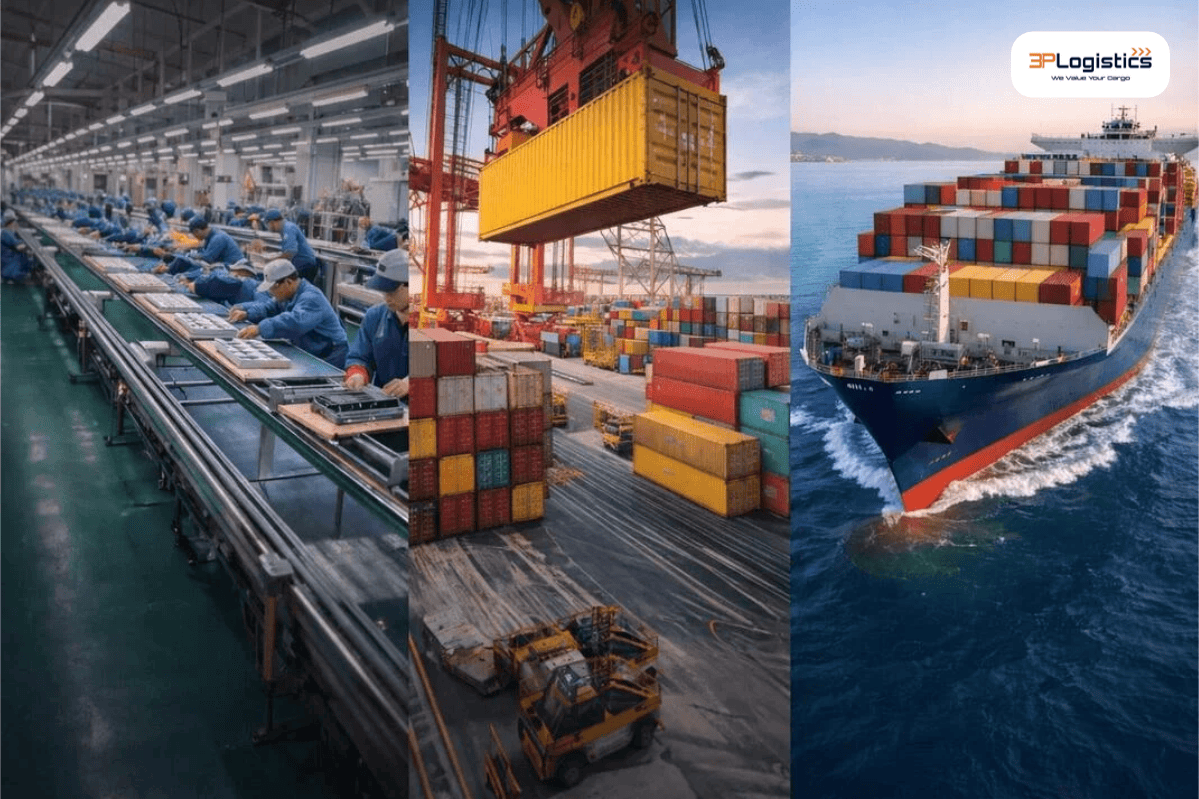
Suppliers → Manufacturing Facilities → Warehouses → Ports/Airports → Global Markets
Such connectivity can help businesses improve control over transportation lead times, inventory levels, and logistics costs.
Industry experts at the Vietnam Industrial Property Forum 2026 also highlighted the importance of integrated logistics infrastructure, digital transformation, energy solutions, and long-term adaptability in developing next-generation industrial ecosystems.
Strengthening Vietnam’s Supply Chain Capabilities
The restructuring of global manufacturing creates significant opportunities for Vietnam while also raising new requirements for the country's supply chain infrastructure.
If Vietnam's earlier competitive advantages were largely based on cost and location, the next stage of competition is likely to depend increasingly on:
Infrastructure + Connectivity + Logistics + Skilled Workforce + Sustainability
Logistics plays a critical role in connecting these elements across the manufacturing ecosystem.
For international manufacturers and exporters, an efficient logistics network can support:
- Optimized international transportation routes
- Better control of delivery lead times
- More proactive import and export planning
- Improved visibility of transportation costs and surcharges
- Multimodal transportation solutions
- Reduced supply chain disruption risks
- More efficient access to international markets
As supply chains become increasingly distributed across multiple countries, the ability to design, coordinate, and manage logistics networks is becoming a key consideration for manufacturers.
3P Logistics: Connecting Businesses to Global Supply Chains
As Vietnam becomes increasingly integrated into global manufacturing networks, businesses need more than transportation services. They need a logistics partner capable of connecting and coordinating multiple links across the supply chain.
3P Logistics provides international logistics and supply chain solutions designed to support businesses involved in import and export activities and international trade.
From transportation planning and freight rate analysis to schedule coordination and shipment management, an integrated logistics approach can help businesses gain greater control over cost, lead time, and supply chain performance.
For manufacturers operating in Vietnam, choosing the right logistics strategy can make an important difference in connecting production facilities with suppliers, ports, international markets, and customers.
Conclusion
The global manufacturing reshuffle is creating a new competitive landscape across Southeast Asia. Vietnam continues to offer significant advantages as a manufacturing and export base, but maintaining and strengthening its position will require more than competitive production costs.
Infrastructure, connectivity, logistics capabilities, workforce quality, and supply chain resilience will increasingly shape the competitiveness of manufacturing ecosystems.
In this evolving landscape, logistics is no longer simply a supporting function behind manufacturing operations. It is becoming a strategic component of supply chain competitiveness.
3P Logistics – Connecting Your Business to Global Supply Chains.
Source: Vietnam Investment Review (VIR), “Vietnam Faces Sharper Competition in Global Manufacturing Reshuffle”, September 29, 2026.